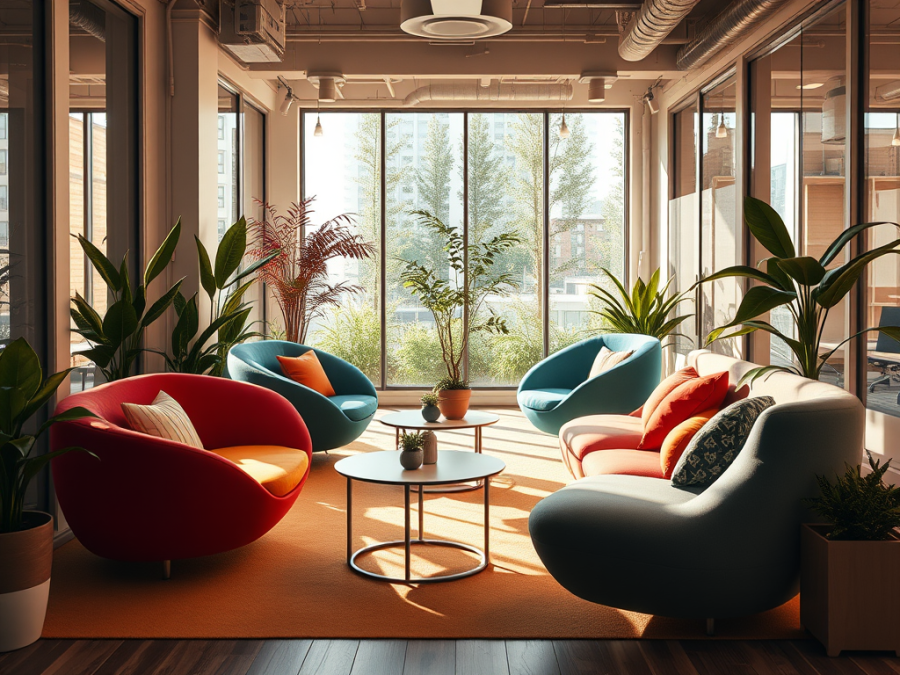
As businesses look beyond performance metrics and begin to focus on employee experience, the psychology of space has become a crucial consideration. Office design is no longer just about optimizing square footage—it’s about understanding how physical environments affect mood, motivation, and mental health. One of the most significant evolutions in this area is the introduction of breakout office furniture.
Breakout spaces are casual, flexible areas within the office that encourage informal interactions, focused work, or restful pauses. But these spaces are more than just trendy additions to a workplace—they’re rooted in psychological principles that foster employee well-being, creativity, and engagement.
Designing for the Mind: The Role of Environment in Productivity
Environmental psychology has long asserted that our surroundings impact our behavior. In the workplace, this means everything from lighting to layout can influence how employees think, feel, and perform. Breakout office furniture contributes to a positive psychological environment in several key ways:
- Reduces stress by offering calm, non-corporate environments
- Inspires creativity through soft textures, organic shapes, and vibrant colors
- Encourages autonomy by providing employees with choice in where and how they work
- Supports collaboration without the formal pressures of boardrooms
Breakout areas signal to employees that their needs go beyond the desk—that productivity includes comfort, social interaction, and mental clarity.
Comfort as a Cognitive Tool
Comfort is often seen as a luxury in office design, but it plays a critical role in cognitive performance. When employees feel physically supported—whether through ergonomic seating or relaxed lounge zones—they are more likely to enter flow states and stay focused for longer periods.
Breakout furniture excels in this area by:
- Offering seating that promotes better posture without rigidity
- Including elements like armrests, cushions, and soft fabrics that reduce muscle tension
- Creating zones that feel psychologically safe, away from high-traffic or high-pressure areas
These features lower cortisol levels and support mental regeneration, especially during intense workdays.
The Power of Choice in Workspace Design
Autonomy is a major driver of motivation. When employees can choose their working environment—even temporarily—it fosters a sense of control, ownership, and trust. Breakout spaces offer that choice without disrupting core office operations.
Employees may gravitate to breakout areas when they:
- Need a quiet place to focus
- Want to brainstorm casually with colleagues
- Feel the need for a change of scenery
- Take a short break to recalibrate their energy
Allowing people to make these decisions creates a culture of respect and responsibility, which has been shown to increase both job satisfaction and loyalty.
Stimulating the Senses for Better Thinking
Great breakout furniture doesn’t just serve a function—it also appeals to the senses. Studies show that environments with visual variety, tactile richness, and natural elements enhance cognitive flexibility and mood. When designing or choosing breakout furniture, consider incorporating:
- Natural materials like wood or wool
- Plants or biophilic design elements
- Varied textures and finishes
- Rounded edges and asymmetrical forms
- Calming yet invigorating color palettes
These choices create a sensory balance that keeps the mind alert without overwhelming it. They also help differentiate breakout zones from the more formal parts of the office, reinforcing the psychological purpose of the space.
Encouraging Movement and Social Bonding
Static environments contribute to fatigue and disconnection. In contrast, well-designed breakout zones encourage light movement and spontaneous interaction. Instead of fixed rows of desks, think in terms of adaptable micro-environments.
Breakout furniture often includes:
- Moveable stools and poufs
- Adjustable tables and laptop stands
- Modular sofas that allow reconfiguration
- High tables for standing or barstool seating
These options support a variety of postures and create an open invitation for team members to join in—naturally strengthening workplace bonds and fostering a sense of belonging.
The Emotional Return on Investment
While breakout furniture may require an upfront cost, the emotional ROI is substantial. Employees who feel that their workplace supports their well-being are:
- Less likely to burn out
- More likely to engage meaningfully with their work
- More loyal to the company
- More productive and innovative
This makes breakout office furniture not just a design choice, but a strategic tool in talent retention, team performance, and brand perception.
The long-term value of investing in employee well-being cannot be overstated—and breakout spaces are one of the most tangible ways to communicate that investment.
Real-World Applications and Growing Trends
As companies adopt hybrid and flexible work models, the emphasis on breakout zones continues to grow. The shift away from rigid office structures mirrors the larger cultural movement toward work-life integration, mental health awareness, and human-centered leadership.
Insights from case studies, such as those shared in https://londonite.co.uk/modern-breakout-office-furniture-transforming-workspaces-for-the-future/, show how the integration of breakout furniture transforms not only the physical space but also the emotional tone of the workplace.
More than an amenity, these zones become part of the organizational identity—spaces where teams regroup, ideas take shape, and individuals feel seen.
Conclusion: Designing with Empathy, Thinking with Purpose
Breakout office furniture represents a new era of intentional workspace design—one that values human experience as much as operational efficiency. By understanding the psychological underpinnings of comfort, choice, and sensory stimulation, businesses can craft environments that truly empower their people.
In the race for productivity, empathy is becoming a competitive edge. When employees feel good, they do good work. And sometimes, the simplest way to make people feel better is to give them a comfortable seat, a quiet moment, and a space that says: “You matter.”

 Furniturea